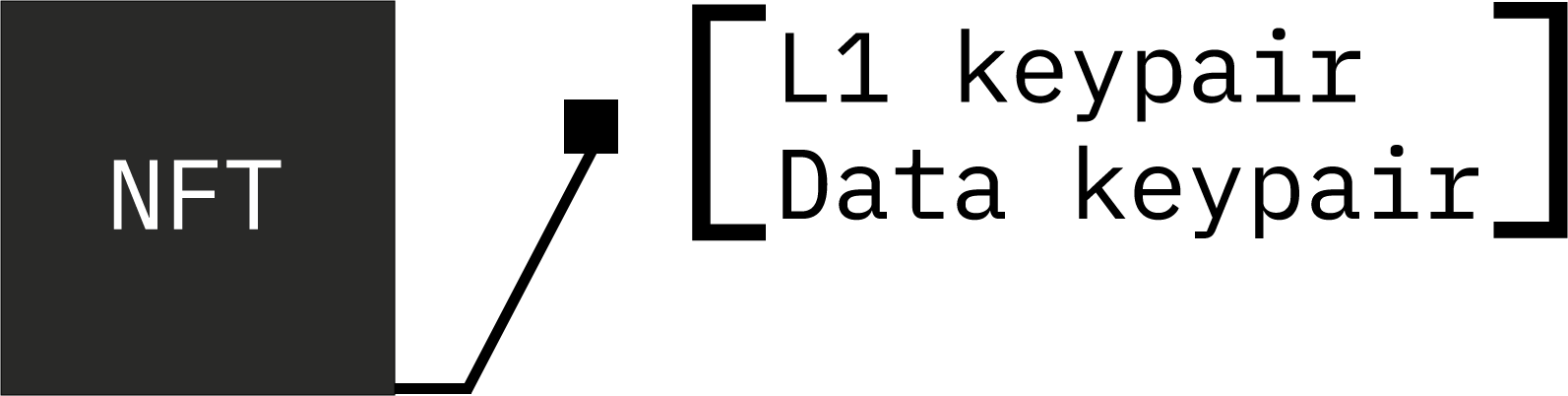
© dat.cash 2026
Digital Ownership
Users must be guaranteed provable authenticity, possession, and control of digital assets to realize the promise of a decentralized, fair and open internet.
For this to be true, users must uniquely control how and where their data is stored.
DATA == STORAGE
Currently, data for NFTs are stored on centralized solutions such as Amazon Web Services or Google Cloud Platform, or Web 3 storage systems controlled by third parties.
Not Your Keys,
Not Your Crypto
Object Permanence
Digital assets on centralized platforms exist temporarily. When a game is turned off or if a new version comes out, in-game assets are non-transferable and lost. A natural benefit of digital assets recorded on distributed ledgers is the manifestation of object permanence.
decentralization
enables permanence
However, this is only true if users also possess the private keys to their data.
on-chain storage enables
censorship-resistance
End-to-end Custody
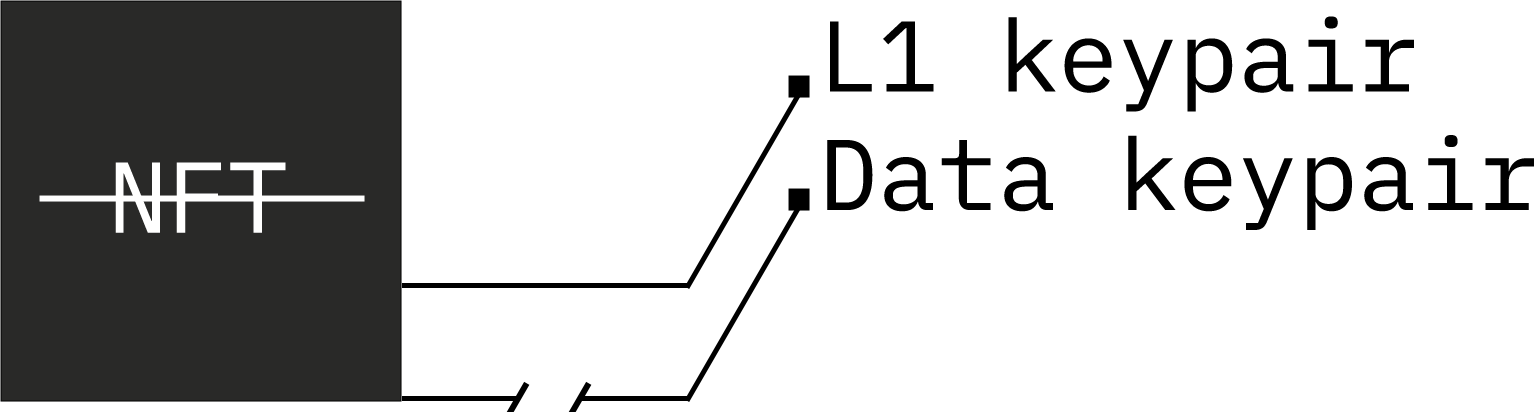
Today NFTs v1.0 are composed of two pieces - a native token with a URL to the data, and the data itself.
In most cases, users only own the native token, but not the data - the quintessential component that makes an NFT.
You don't own
your NFTs
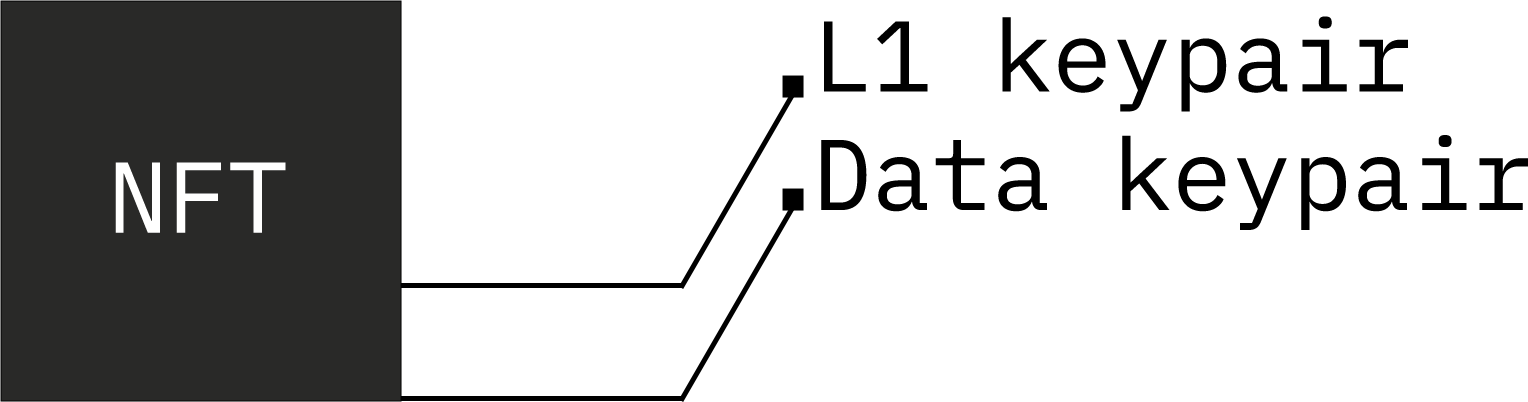
We introduce the concept of End-to-end custody (e2ec) - possession and transfer of ownership of all parts of a digital asset.
Full digital asset ownership is cryptographically bound during transfer by dat protocol.
e2e custody
enables NFTs v2.0